
Kennel fencing plays an important role in the safety, function, and daily operation of pet boarding facilities, dog daycares, veterinary properties, animal shelters, and other pet care businesses. Unlike a standard backyard fence, custom kennel fencing must be designed for repeated use, secure containment, easy access, and the unique needs of animals and staff.
For pet care facilities, fencing is not just a boundary. It helps organize the property, separate play areas, support controlled movement, and create safer spaces for dogs of different sizes, temperaments, and activity levels.
Boundary Fence provides commercial fencing products, custom gates, and pet kennel solutions for customers in Denver and the surrounding areas. The company also offers residential, commercial, and industrial fencing services, making kennel fencing a natural fit for both pet-focused businesses and property owners who need durable animal enclosures.
Why Kennel Fencing Requires a Custom Approach
A kennel or pet boarding facility has different fencing needs than a typical residential yard. Dogs may jump, dig, chew, lean, run, or push against fence sections. Staff members may need to move animals between outdoor runs, indoor areas, cleaning zones, and play spaces throughout the day.
Custom kennel fencing allows the layout to match the way the facility actually operates. Instead of using one general fence design, the enclosure can be planned around safety, traffic flow, cleaning access, gate locations, and animal separation.
A well-planned custom kennel fencing can help support:
- Secure dog containment
- Separate spaces for different dog sizes
- Outdoor runs and exercise areas
- Safer staff access
- Organized facility flow
- Easier cleaning and maintenance
- Reduced risk of animals entering restricted areas
This makes custom kennel fencing a functional part of the business, not just an exterior feature.
Important Design Considerations for Kennel Fencing
The right kennel fencing design depends on the facility, the animals being cared for, and how the space is used each day. A dog daycare may need larger open play areas, while a pet boarding facility may need individual runs, transition spaces, and more controlled access points.
Before installing custom kennel fencing, facility owners should consider the fence height, material strength, gate placement, visibility, drainage, cleaning access, and how animals will be separated.
Fence layout is especially important. A good design should make it easy for staff to move safely while keeping dogs contained in the right areas. For example, separate gates or divided sections may help reduce crowding, limit direct contact between animals, and make daily routines more manageable.
Choosing Materials for Kennel Fencing
Kennel fencing should be built with durability and visibility in mind. Chain link is often a practical option for pet boarding facilities because it is strong, cost-effective, and allows staff to monitor animals easily. Boundary Fence lists galvanized chain link security fencing, vinyl coated chain link, custom gates, indoor fencing, partitions, and custom panels among its industrial and commercial offerings.
For pet facilities, chain link kennel fencing can be useful because it provides a clear barrier while keeping the area visible. Visibility helps staff supervise dogs, identify behavior changes, and monitor movement between sections.
Depending on the facility, vinyl-coated chain link may also be a good option for a cleaner appearance and added surface protection. Custom panels, partitions, and gates can help create a more organized layout for indoor or outdoor kennel areas.
Gate Placement Matters
Gates are one of the most important parts of kennel fencing. A fence may be strong, but poor gate placement can make the facility harder to manage.
Pet boarding facilities may need multiple access points for staff, animals, cleaning equipment, food delivery, waste removal, and emergency movement. Gates should be located where they support safe, efficient routines without creating unnecessary escape risks.
In many kennel environments, it may also be helpful to use double-gate entry areas or transition spaces. These can create an added layer of control when moving dogs in and out of runs or play yards.
Separating Dogs by Size, Temperament, and Use
One major benefit of custom kennel fencing is the ability to divide a property into specific zones. Not every dog should use the same play area or outdoor run. Some dogs need smaller spaces, calmer environments, or separation from larger groups.
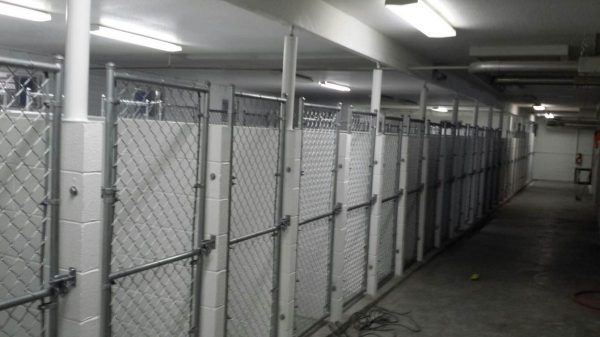
Kennel fencing can be used to create:
- Individual kennel runs
- Small dog areas
- Large dog areas
- Outdoor exercise spaces
- Intake or transition zones
- Staff-only access areas
- Cleaning or maintenance sections
- Restricted utility spaces
This type of layout can make the facility safer and easier to operate.
Durability and Maintenance for Pet Care Facilities
Kennel fencing should be selected with long-term use in mind. Pet boarding facilities often experience more wear than a typical residential property because gates, latches, panels, and posts may be used many times throughout the day.
Facility owners should routinely inspect the fence for loose hardware, bent sections, damaged panels, rust, sharp edges, gate alignment issues, and areas where dogs may try to dig. Addressing problems quickly can help prevent safety concerns and extend the life of the enclosure.
A professional fencing company can also help recommend materials and layouts that are easier to maintain over time.
Kennel Fencing for Indoor and Outdoor Spaces
Some pet care facilities need fencing both inside and outside. Outdoor kennel fencing may be used for exercise yards, runs, and secure perimeter areas. Indoor fencing or partitions may be used to divide rooms, organize animal areas, or create controlled holding spaces.
Boundary Fence lists indoor fencing, partitions, tool cribs, storage areas, custom gates, and custom panels as part of its commercial and industrial fencing capabilities. These types of solutions can be adapted for many facility layouts where controlled separation is important.
Work With Boundary Fence for Custom Kennel Fencing
If you operate a pet boarding facility, dog daycare, veterinary property, animal shelter, or another pet-focused business, custom kennel fencing can help create a safer and more organized environment.
Boundary Fence has served Denver and the surrounding areas since 1973 and provides residential, commercial, and industrial fencing solutions, including commercial fencing products, custom gates, and pet kennel options.
Whether you need outdoor dog runs, secure gates, divided play areas, indoor partitions, or a full kennel fencing layout, Boundary Fence can help you choose a practical solution for your facility.
Contact Boundary Fence today to request a free estimate for kennel fencing in the Denver area.