
Creating a safe outdoor space for your dog is one of the most important reasons homeowners invest in fencing. But before you fence in the entire yard, it is worth asking whether a dedicated dog run might be a better fit. Both options can work well, but the right choice depends on your dog, your property, and how you use your outdoor space.
At Boundary Fence, we help homeowners choose fencing solutions that make daily life easier. For many families, dog run fencing offers a practical way to give pets room to play while keeping the rest of the yard more flexible.
What Is Dog Run Fencing?
Dog run fencing creates a specific enclosed area just for your dog. Instead of giving your pet access to the entire yard, a dog run provides a defined space for exercise, bathroom breaks, and outdoor time.
Dog runs can be installed along the side of a house, in a backyard corner, near a garage, or in another convenient area of the property. They are often built with chain link, welded wire, kennel panels, or other durable fencing materials that can handle regular pet use.
A well-designed dog run should include enough room for movement, a secure gate, proper height, safe spacing, and a layout that makes cleaning and access simple.
What Is Full Yard Fencing?
Full yard fencing encloses most or all of the backyard. This option gives your dog more open space to explore and can also provide privacy, security, and a clear property boundary.
For homeowners who want one fence to serve multiple purposes, full yard fencing can be a strong choice. It can help contain pets, improve privacy, protect children’s play areas, and create a more finished outdoor space.
However, full yard fencing may not be ideal for every property. Some yards have landscaping, garden beds, patios, pools, steep slopes, or shared areas that homeowners may not want pets accessing freely.
When Dog Run Fencing Makes More Sense
Dog run fencing is often the better choice when you want more control over where your dog spends time outside. This can be helpful for homes with delicate landscaping, outdoor furniture, garden areas, or sections of the yard that need to stay cleaner.
A dedicated dog run can also make cleanup easier because pet activity is limited to one area. Instead of searching the entire yard, homeowners can maintain one defined space.
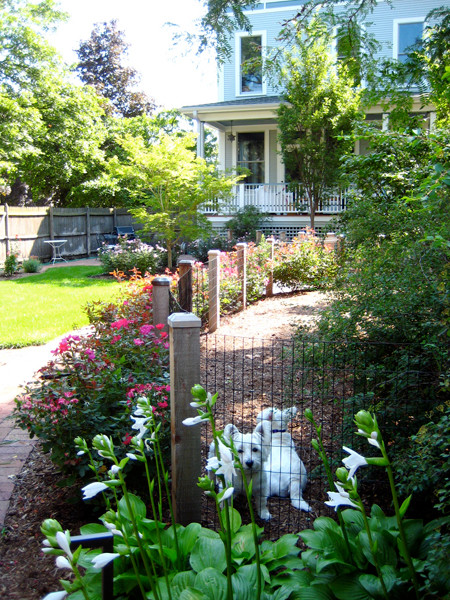
Dog run fencing can be especially useful for:
- Dogs that dig, jump, or need closer supervision
- Smaller yards where space needs to be organized
- Homes with gardens, patios, or play areas
- Pet owners who want a cleaner main lawn
- Side yards that are currently underused
A dedicated dog run can also support puppy-proofing your yard by creating a safer, more controlled area away from plants, pools, and other outdoor hazards.
For busy households, a dog run can make everyday routines easier while still giving pets a safe place to enjoy fresh air.
When Full Yard Fencing May Be Better
Full yard fencing may be the better option for dogs that need more room to run. Larger dogs, active breeds, and pets that spend a lot of time outdoors may benefit from having access to a larger enclosed space.
A full yard fence can also be more convenient if your family uses the backyard with your dog often. If your dog is part of every cookout, play session, and evening outside, enclosing the whole yard may feel more natural.
Still, homeowners should think about wear and tear. Dogs can create paths, dig near fence lines, damage landscaping, or track mud across larger areas. In those cases, dog run fencing may still be worth considering as a way to protect certain parts of the yard.
Comparing Safety and Security
Both fencing options can help keep dogs safer, but design matters. The fence should be tall enough for your dog, strong enough for regular use, and secure enough to prevent escapes.
With dog run fencing, homeowners can focus safety features in one controlled area. That may include secure latches, reinforced bottoms, shade, drainage, and materials that match the dog’s size and behavior.
With full yard fencing, safety planning needs to cover a larger area. Gates, corners, low spots, gaps, and access points all need attention. This can be especially important for dogs that like to dig or test boundaries.
Cost and Maintenance Considerations
Cost often depends on the size of the fenced area, the material used, the number of gates, site conditions, and installation needs. Because dog run fencing usually covers a smaller area, it may be more budget-friendly than enclosing an entire yard.
Maintenance can also be simpler with a dog run. A smaller enclosed area is easier to inspect, clean, and repair. Full yard fencing may require more material, more posts, more gates, and more long-term upkeep.
That said, a full yard fence may offer more overall property value if you also want privacy, security, and a finished backyard boundary.
Choosing the Right Option for Your Home
The best choice comes down to how your dog behaves and how your family uses the yard. If your dog needs a safe, dedicated space and you want to protect the rest of your outdoor area, dog run fencing may be the better fit. If your dog needs more room and your goal is to enclose the entire property, full yard fencing may make more sense.
Many homeowners also choose both. A full yard fence can create the main boundary, while a dog run adds a separate space for pet use when needed.
Boundary Fence Can Help You Plan the Right Setup
Whether you need a dedicated dog run, full yard fencing, or a combination of both, Boundary Fence can help you create a safe and practical outdoor space. Our team can recommend the right layout, height, gate style, and fencing material for your property.